
Storm-Damaged Metal Roof? What to Do First
January 16, 2026
Storms on the Sunshine Coast can leave a home feeling exposed fast, and metal roofs often take the brunt of wind, hail, and flying debris. At CBT Roofing, we know that moment after a storm can feel overwhelming, especially when you’re not sure what’s safe to check and what needs urgent attention. Acting quickly and calmly can make a big difference to how much water gets inside and how smoothly roof repairs on the Sunshine Coast can be arranged.
The first few hours matter because metal roof damage often starts small, such as lifted flashings, loosened screws, or dented sheets, but can quickly turn into active leaks and internal water damage. Many homeowners want to climb up straight away for a closer look, but a storm-damaged metal roof can be slippery, sharp, and unstable. Knowing what to do first, what to avoid, and when to call a professional helps protect both your home and everyone inside it.
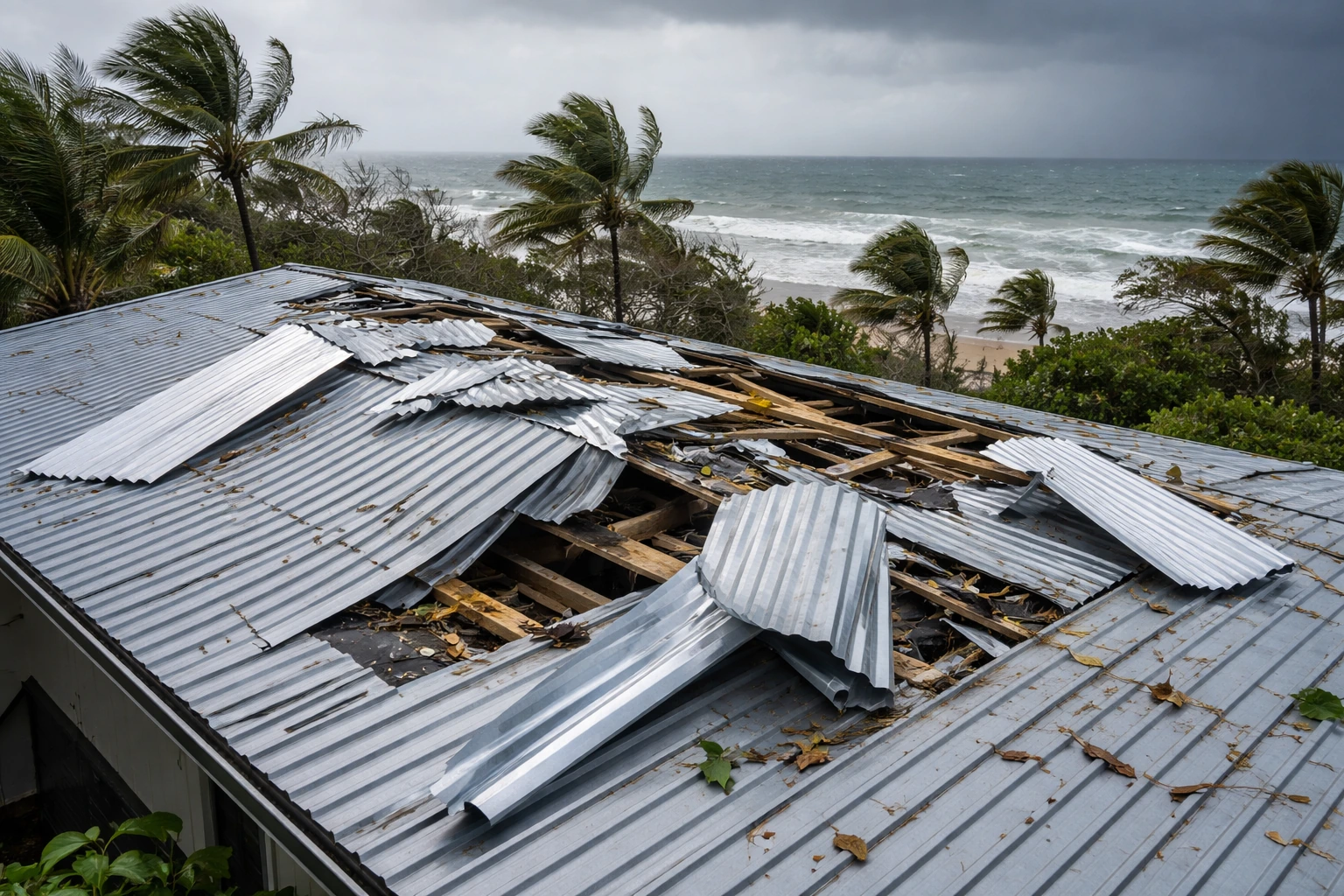
Safety comes first after a storm because damaged metal roofing can become sharp, unstable, and unpredictable. Even if the weather has passed, loose sheets, lifted flashings, and displaced fixings can still be dangerous, especially if wind gusts continue or debris is sitting on the roof edge.
Once conditions are calm, walk around the property and check for hazards on the ground, such as fallen branches, pieces of metal sheeting, loose screws, or sharp fragments from roof flashings. Keep children and pets away from the area, and avoid touching anything that looks unstable. Making the site safe does not mean attempting repairs yourself. A storm-damaged metal roof can have hidden weak points, and climbing up too soon can lead to injury or make the damage worse.
If water is entering the home, focus on protecting the inside from further damage while waiting for professional help. The goal in this first stage is simply to keep everyone safe and prevent the situation from escalating until the roof can be inspected properly.
After a storm, it’s normal to want to get up and check the roof straight away, but a storm-damaged metal roof can be extremely unsafe even if the damage looks minor from the ground. Wet metal sheeting becomes slippery fast, and dents or lifted sections can make the surface unstable underfoot.
It’s also common for wind to loosen screws, ridge cappings, flashings, and sheet overlaps. That means areas that used to feel solid can suddenly shift, flex, or lift when weight is applied. Even if you’re confident on ladders, it’s not worth the risk, especially when the roof may have sharp edges or hidden movement from storm impact.
The safest approach is to stay off the roof and leave the inspection to a qualified roofer with the right safety gear and experience working on storm-damaged metal roofing.
With storm damage, the biggest issue is often not the dents or noise from the weather event, but what happens after it. Even small gaps in a metal roof can let wind-driven rain in, and once water gets into insulation, ceilings, and wall cavities, the damage can spread quickly.
Without climbing onto the roof, there are still a few safe steps you can take inside to limit the impact until a roofer arrives. The goal is to contain water, protect belongings, and reduce the chance of long-term moisture problems.
If water is dripping near lights, power points, or electrical fittings, keep clear of the area and switch off power at the main switchboard if it’s safe to do so. A leaking metal roof can allow water to travel along framing and wiring, so it’s important not to ignore any electrical risk while waiting for repairs.
After a storm, it’s tempting to jump straight into taking photos, making calls, and trying to work out what’s happened. But when a metal roof has been damaged, the safest decision is always to stabilise the situation first. Nothing moves forward smoothly if someone gets injured or the property becomes more unsafe.
Once everyone is out of danger and you’ve contained any internal leaking as best as possible, you can then document the damage properly and contact the right people. Most insurers and roofers expect homeowners to prioritise safety, so taking a short amount of time to secure the area won’t harm your claim.
Once the immediate risk is under control, you’ll be in a much better position to organise a professional inspection and get the repair process moving.
Once the property is safe, the next step is to get a basic idea of what’s happened to your metal roof without climbing up or handling anything unstable. You can often spot clear warning signs from the ground, from inside the home, or by walking around the exterior using safe viewing angles.
The aim isn’t to diagnose every issue yourself. It’s simply to gather enough information to explain the situation when you contact a roofer or insurer, and to understand whether the damage looks minor or more serious.
Start by checking the outside of the home for obvious roof-related debris, displaced metal pieces, or signs that water may be entering near gutters or roof edges. Then check inside for leaks, stains, and moisture marks, especially around ceilings, cornices, and any areas directly under roof penetrations like vents or skylights.
A few careful observations from safe locations can help you take the right next steps, without increasing the risk to yourself or causing further damage to the roof.
You can often identify storm damage on a metal roof without getting up there. From the ground, look for changes in the roofline, lifted edges, or anything that looks uneven compared to how it normally sits. Even small shifts in metal sheeting or flashings can create entry points for wind-driven rain.
After severe weather, metal roof damage commonly shows up around ridge cappings, valleys, gutters, and sheet overlaps, because these areas take the most force from wind and water.
You may also notice metal fragments, screws, or pieces of flashing on the ground near the house. That’s a strong sign something has shifted above and should be inspected by a professional as soon as possible.
With storm damage, internal signs often appear before you can clearly see what’s happened on the outside of the metal roof. Water can travel along roof battens, insulation, and ceiling spaces before it finally shows up as a stain or drip inside the home.
Pay close attention to ceilings and upper walls, especially in rooms directly under the main roof area. Even if the leak seems small, it can still mean water is spreading through insulation or pooling in the ceiling cavity.
A musty smell, bubbling paint, or damp patches that feel cold to the touch can also indicate slow leaks from loosened fasteners or lifted flashings on a metal roof. If you spot any of these signs, it’s worth arranging an inspection quickly, even if the damage doesn’t look dramatic from outside.
Not all metal roof damage is easy to spot straight away. Some issues don’t show obvious leaks immediately, but still weaken the roof system and increase the risk of water entry during the next downpour.
Hail can leave small dents that don’t look serious from the ground, but may damage protective coatings. Over time, those tiny impacts can become corrosion points, especially in coastal conditions. Strong winds can also loosen screws and washers without pulling them out completely, which means the roof may look intact but no longer be watertight.
This is why professional inspections matter after major storms. A metal roof can appear mostly normal, but still have multiple small weak points that cause ongoing leaks and expensive internal damage if left untreated.
Once the immediate safety risks are under control and you’ve identified the likely problem areas, the next step is working out what happens next. With a storm-damaged metal roof, the best outcome usually comes from acting early, because small issues like lifted flashings or loose screws can quickly turn into major internal water damage.
At this stage, it helps to think in terms of priority. First, stop further water entry. Second, get the roof assessed properly. Third, document everything clearly so repairs and insurance can move forward without delays.
Some storm damage is minor and can be repaired quickly without a claim. Other situations, such as widespread sheet movement, major hail damage, or water entering multiple areas of the home, may require insurance involvement and a more structured repair plan. Knowing what to do next makes the process far less stressful and helps you avoid repeating inspections or chasing approvals later.
Who you call first depends on how severe the metal roof damage is and whether water is actively entering the home. In many cases, contacting a roofer early is the fastest way to reduce further damage, because stopping water entry often matters more than starting paperwork.
If there are obvious signs the roof has shifted, flashings have lifted, or leaks are actively spreading inside, a roofer can inspect the metal roof, identify the cause, and recommend the safest repair approach. In larger storm events, insurers may still need photos, reports, and confirmation of the damage before approving major work, so it’s often best to involve both in the right order.
The key is avoiding unnecessary waiting while the home continues taking on water. A professional assessment helps you move forward with repairs confidently and gives you the right documentation for insurance if needed.
Strong documentation makes storm claims easier, especially when the damage involves a metal roof, where problems like lifted flashings, loose screws, or hail impacts can be hard to describe without clear evidence. The goal is to capture what you can safely from the ground and inside the home, without climbing onto the roof or putting yourself at risk.
Start as soon as it’s safe, before temporary clean-up removes important details. Keep it simple and organised so your roofer and insurer can understand the full picture quickly.
If you buy anything to reduce internal damage, such as tarps, plastic sheeting, towels, or containers, keep receipts where possible. This supports the fact that you acted quickly to prevent further loss, which is often expected during the claim process.
After a storm, one of the biggest questions homeowners have is whether the metal roof can be repaired or if it needs larger-scale work. The right answer depends on how widespread the damage is, whether water has entered the roof system, and whether the roof’s protective layers have been compromised.
In many cases, targeted repairs are enough. A roofer may be able to replace damaged flashings, reseal roof penetrations, tighten or replace fasteners, and restore sections that have lifted. But if the storm has caused major sheet movement, repeated leaking points, or extensive hail damage across large areas, replacement may be the more reliable long-term solution.
A qualified inspection is the best way to get clarity. An experienced metal roofing team can assess whether the roof is still structurally sound, whether the damage is isolated, and whether repairs will hold up through future storms.
Storm damage is stressful, but taking the right first steps can protect both your household and your metal roof from further damage. By staying off the roof, managing internal leaks safely, checking for visible warning signs from the ground, and documenting what you can, you reduce the risk of the problem escalating before repairs begin.
Even minor issues like lifted flashings, loosened screws, or hail impact damage can lead to ongoing leaks if they are not repaired properly. A professional inspection helps confirm what needs fixing and whether repairs will be enough, so the roof is made secure again and ready for the next storm.