
Which Metal Roofing Profile Is Right for Your Home?
June 23, 2026
Choosing the right profile is one of the most important decisions when planning metal roofing in Sunshine Coast homes. Beyond appearance, the profile affects how a roof handles heavy rainfall, coastal conditions, wind exposure, roof pitch and long-term maintenance.
With options ranging from traditional corrugated sheets to modern concealed-fix systems, understanding the strengths and limitations of each profile can help ensure the roof is suited to both the home and the local environment. CBT Roofing considers factors such as coastal exposure, rainfall intensity and roof design when helping homeowners compare metal roofing options.
Choosing between corrugated, ribbed and concealed-fix metal roofing profiles comes down to how the roof should look, how it needs to perform and how much visible fixing is acceptable. Each profile handles water run-off, wind exposure, thermal movement and maintenance differently.
Although all three options use metal sheets, the shape of the profile, the fixing method and the spacing of ridges or ribs can affect durability, noise, drainage and suitability for different roof pitches.
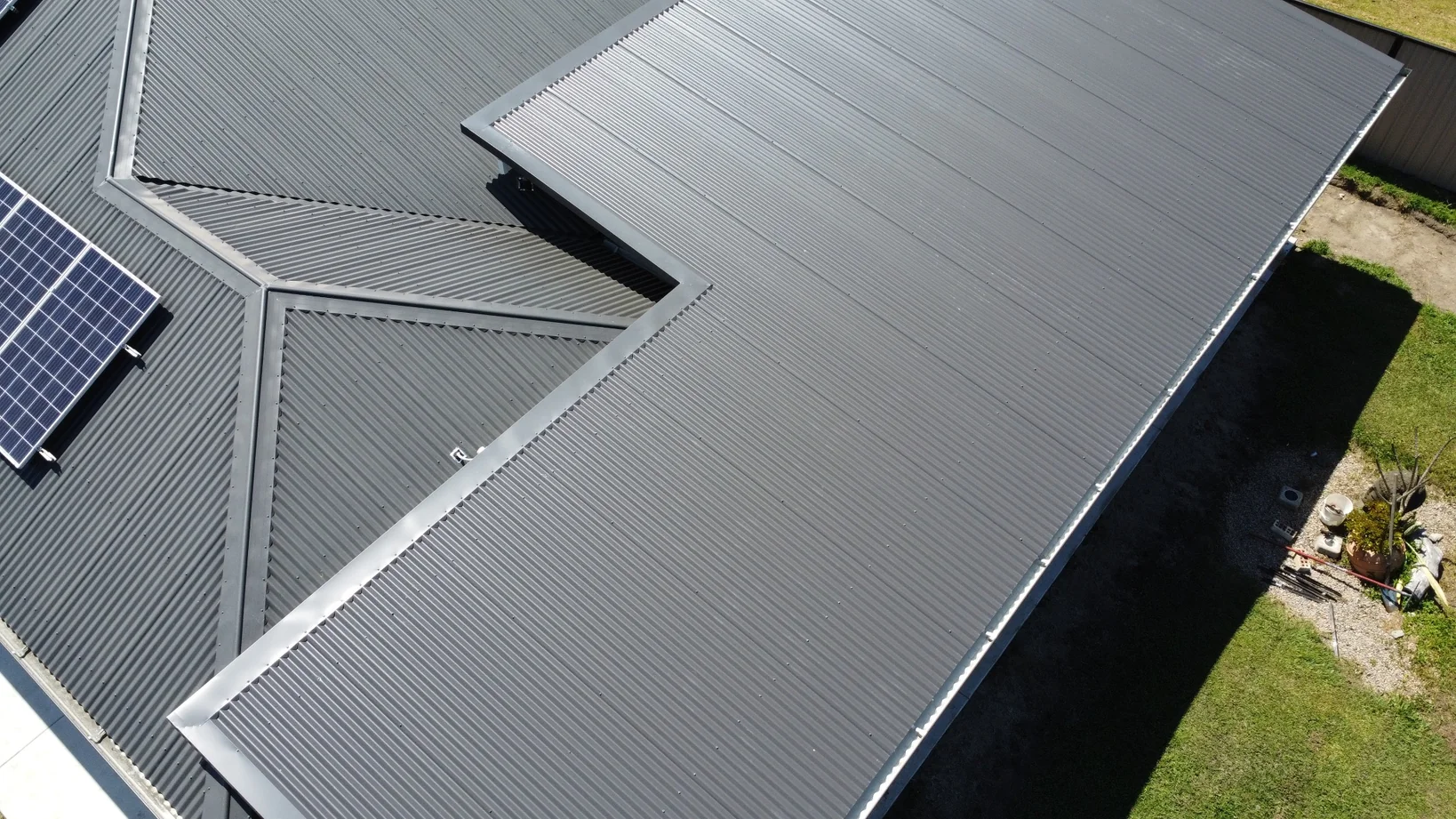
Corrugated metal uses continuous wave-like ridges and has a classic, familiar appearance. It is often chosen for garages, sheds, coastal homes, rural properties and older-style houses where a traditional roof profile suits the design.
Because of its rounded shape and frequent ridges, corrugated roofing sheds water well on moderate to steep roof pitches. However, it is generally less suited to very low-pitch roofs. On low pitches, water can be more likely to track between sheet overlaps, especially during heavy or wind-driven rain. This is why correct overlap, sealing and minimum pitch requirements are important.
Corrugated sheets are usually fixed with exposed screws and washers through the crest of the sheet. This provides a secure fixing method, but it also means there are more visible fasteners and more points that may need checking over time. If screws are over-tightened, misaligned or left to deteriorate, leaks can develop around the fixings.
Corrugated profiles are relatively straightforward to install and can be easier to replace in smaller sections. However, the repeated curved surface may make dents, foot traffic marks or slight distortions more noticeable under certain light.
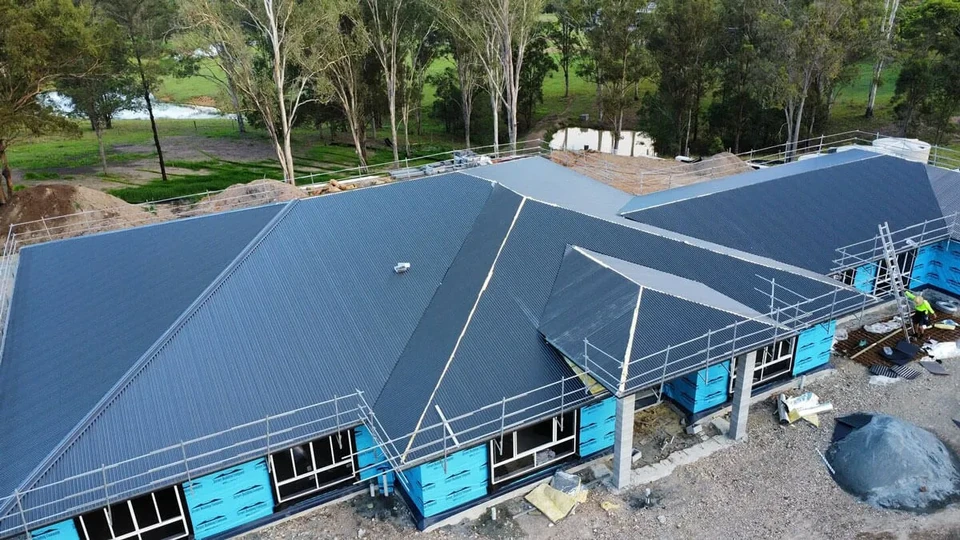
Ribbed or trapezoidal profiles have broader flat pans separated by taller angular ribs. This creates a cleaner, more modern look while still remaining practical and cost-effective for many homes.
Compared with corrugated sheets, ribbed profiles usually offer better rigidity and spanning capacity. The higher ribs can help move water efficiently and provide good performance in heavy rain when the roof pitch, sheet length and fixing method are suitable. This can make ribbed profiles a versatile option for many Sunshine Coast homes.
Ribbed roofing is also commonly used on both roofs and wall cladding, which can create a consistent look across the exterior of a home. The long, straight lines suit modern extensions, skillion roofs and simple roof forms.
Like corrugated roofing, many ribbed profiles use exposed fasteners. This means screw placement, alignment and maintenance still matter. The broader flat pans can also be more prone to visible waviness, known as oil-canning, if the product is not correctly specified, handled or installed.
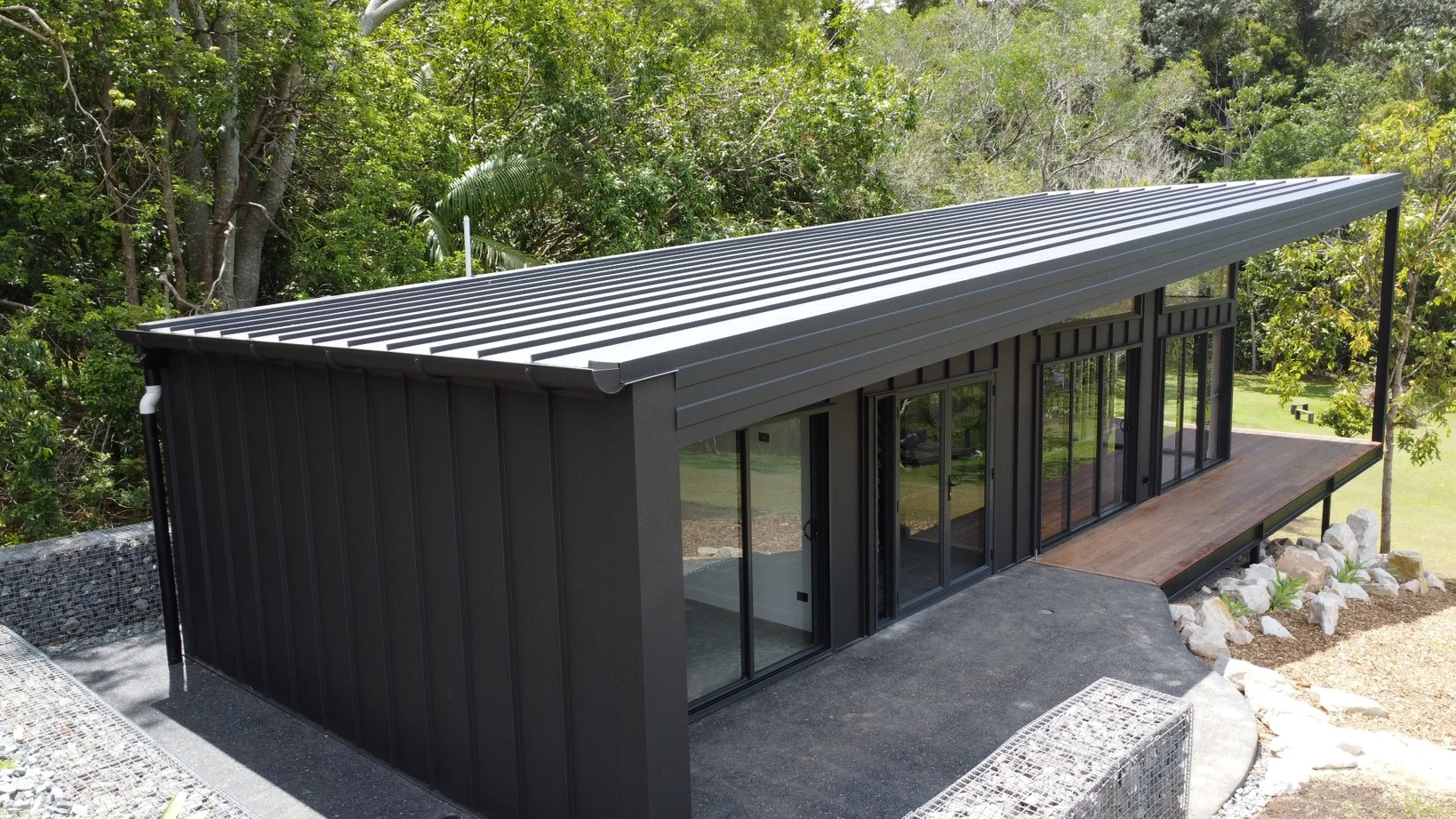
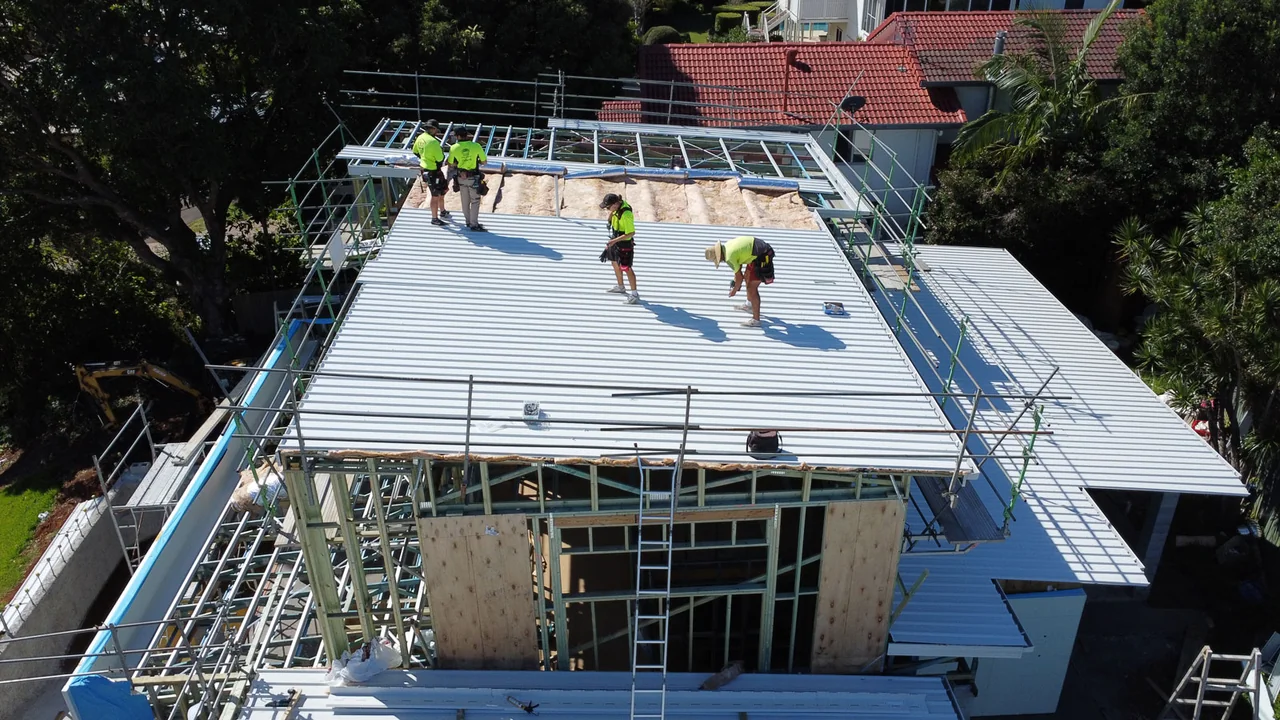
Concealed-fix profiles hide all or most screws using clips or folded seams. Common examples include standing-seam and clip-fix systems. These profiles are often chosen for contemporary homes because they create a clean, uninterrupted appearance with no visible screw heads across the main roof surface.
Because the sheets are secured with clips rather than fixed tightly through the surface, many concealed-fix systems allow the metal to expand and contract more freely as temperatures change. This can reduce stress around fixings and help improve long-term performance, particularly on longer sheet runs.
Concealed-fix profiles can also be well suited to low-pitch roof designs, depending on the specific product and manufacturer requirements. This makes them a common choice for modern architectural homes, long skillion roofs and roof areas where water management is especially important.
The main trade-off is cost and installation complexity. Concealed-fix systems usually take longer to install and require careful detailing. Clips must be positioned accurately, sheets must be correctly engaged and flashings must be installed to suit the roof design. When installed properly, the result is a sleek finish with fewer exposed fasteners to maintain.
Roof pitch plays a major role in choosing the right metal roofing profile. A profile that performs well on a steep roof may not be suitable for a low-pitch design. Manufacturer minimum pitch requirements should always be checked before a profile is selected.
Corrugated roofing generally suits moderate to steep roof pitches and homes where a traditional look is preferred. It works well on visible roof areas, older homes, coastal-style houses and simple roof forms where the classic wave pattern complements the design.
Ribbed roofing offers a more contemporary appearance and can suit a wider range of roof styles. It is often used on new builds, renovations and homes where a clean linear profile is preferred. Many ribbed profiles can perform on lower pitches than corrugated profiles, but each product still has its own minimum pitch requirement.
Concealed-fix roofing is usually best suited to homes where a sleek architectural finish is wanted or where the roof has a very low pitch. These systems can be especially useful on modern designs where visible screws would interrupt the appearance or where long sheet runs need to allow for thermal movement.
Sunshine Coast roofs need to cope with strong UV exposure, salt-laden coastal air, heavy rainfall, humidity and occasional severe storms. These conditions can affect fasteners, coatings, flashings and the overall performance of the roof system.
In exposed coastal or elevated areas, wind uplift and wind-driven rain are important considerations. Concealed-fix profiles can offer strong performance in exposed conditions when they are correctly specified, engineered and installed. Because the main roof surface has fewer exposed screw penetrations, there may also be fewer potential leak points across the sheet.
Ribbed profiles can also perform well in strong weather conditions when the correct gauge, fixing pattern and roof pitch are used. The taller ribs can add stiffness and help with drainage during heavy rain.
Corrugated roofing is still suitable for many residential properties, but it needs to be carefully matched to the site. On exposed blocks, coastal homes or low-pitch roofs, the fixing schedule, sheet overlap, pitch and product selection become especially important.
Heavy short-burst rainfall is common on the Sunshine Coast, so effective drainage is essential. The roof profile must be able to move water quickly enough to reduce the risk of ponding, overflow, backflow into laps or water entering the roof cavity.
Corrugated sheets perform best when the roof has enough pitch for water to clear quickly. On flatter roofs, water is more likely to sit or track sideways between sheet laps.
Ribbed and concealed-fix profiles often provide better drainage options for lower-pitch roofs because they usually have deeper pans, higher ribs or specially engineered side-lap details. However, performance still depends on the exact product, sheet length, pitch, gutter capacity and installation quality.
Gutters, flashings, valleys and downpipes should also be considered as part of the roofing system. Even the right roof profile can perform poorly if water is not directed away from the roof effectively.
Corrugated and standard ribbed profiles are usually faster to install than concealed-fix systems. They can be a practical option for straightforward roof shapes, sheds, garages and many residential homes. However, because they use exposed screws, the fasteners may need checking or replacement over time as washers age in coastal conditions.
Concealed-fix systems generally have higher material and labour costs, but they reduce the number of exposed fasteners across the roof surface. Maintenance often focuses more on general roof cleaning, flashing checks, gutter condition and inspection of seams rather than screw replacement across the main roof area.
For complex roof layouts with penetrations, valleys, junctions, skylights or multiple roof levels, profile selection becomes even more important. Ribbed and concealed-fix profiles may offer better detailing options in some situations, but the best choice depends on the roof design and site conditions.
Selecting a metal roofing profile involves balancing appearance, performance, roof pitch, exposure and maintenance. Corrugated, ribbed and concealed-fix systems each have advantages depending on the style of the home, the slope of the roof and the conditions the roof needs to withstand.
For Sunshine Coast homes, the best profile is not always the most modern or the most expensive option. It is the profile that suits the roof design, manages heavy rainfall effectively, withstands local weather conditions and can be installed correctly for long-term durability.