

Why Is My Metal Roof Leaking? Common Causes and What to Check
April 22, 2026
When a metal roof is installed, it is expected to provide long-lasting protection with relatively little maintenance, so the appearance of damp patches, staining, or active drips can quickly become frustrating and concerning. In many cases, leaks do not begin in the metal panels themselves but in the details that support the roof system, such as fasteners, flashings, laps, penetrations, and drainage points. For property owners dealing with roof repairs in Sunshine Coast, understanding where these failures usually begin makes it easier to recognise early warning signs and respond before minor issues become more serious.
CBT Roofing outlines the most common causes of metal roof leaks, the areas that require the closest inspection, and the difference between problems that may be resolved with targeted repairs and those that indicate broader deterioration. It also explains how faults such as loose screws, ageing sealants, corroded components, poor drainage, structural movement, and condensation can all contribute to moisture problems under a metal roof.
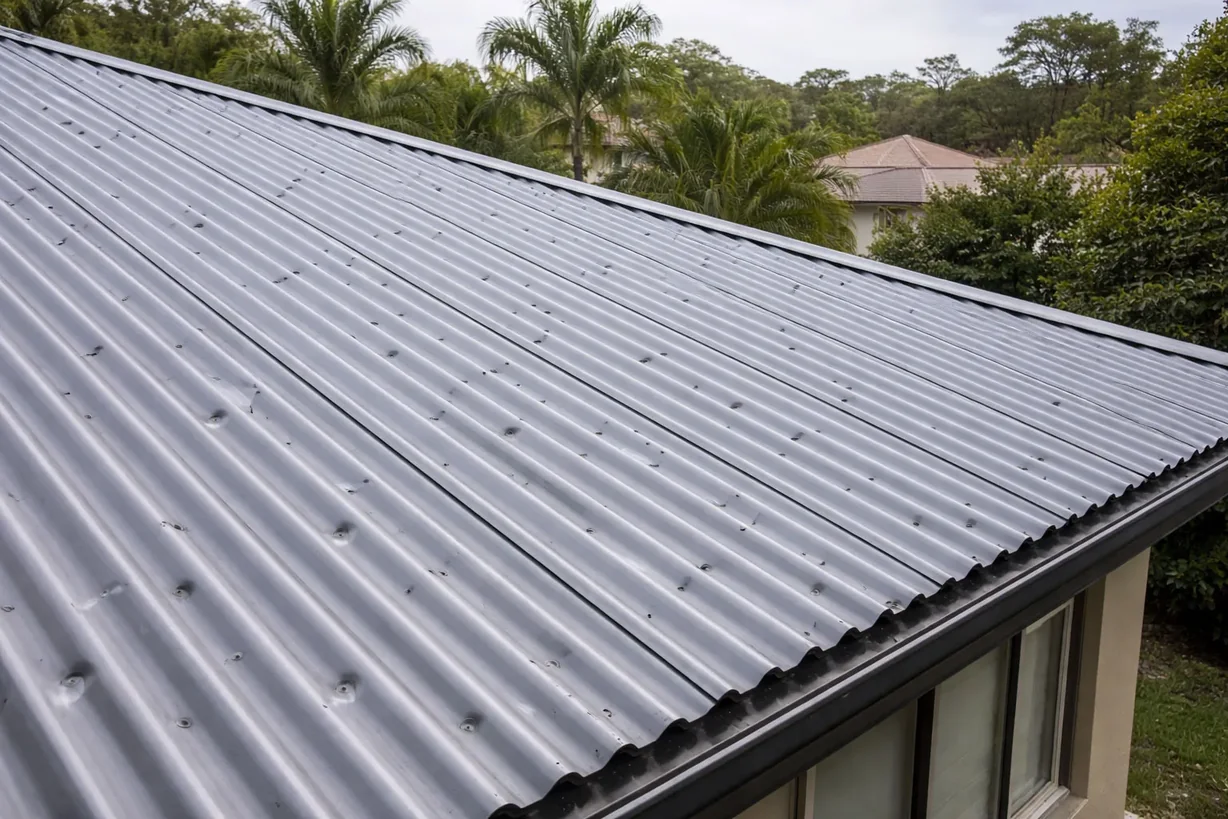
Metal roofs rarely leak through the flat field of the panels themselves. Most leaks begin at details where panels meet, change direction, or are interrupted by another element. These areas are naturally more vulnerable because they rely on precise installation, sound sealing, and ongoing weather resistance to remain watertight.
The most common starting points are fasteners, panel laps, flashings, penetrations, valleys, and roof edges. Even a very small gap in one of these locations can allow wind-driven rain to enter the roof system, and once water gets in, it can travel well beyond the original entry point before becoming visible inside.
Exposed-fastener metal roofs depend on large numbers of screws to hold panels securely in place. Over time, these fasteners can loosen slightly due to thermal expansion and contraction, vibration, wind pressure, or minor structural movement. When a screw lifts even a little, the washer beneath it may no longer compress tightly enough to keep water out.
Washers also deteriorate with age. UV exposure, heat, and weathering can cause them to dry out, crack, or become brittle, which weakens the seal even if the screw itself still appears firm. Rusted or stained fasteners are another warning sign, as corrosion can affect both the screw and the surrounding panel. Rather than simply re-tightening suspect screws, it is usually better to replace them with correctly sized roofing fasteners fitted with new washers.
Where one roof panel overlaps another is another common leak point. On through-fastened systems, side laps usually depend on proper fastener spacing and effective sealant to remain watertight. If screws are missing, loose, or overdriven, or if the sealant has deteriorated, the overlap can open enough for water to be drawn in.
End laps are often more vulnerable on lower-slope roofs. If the overlap is insufficient, if the sealant bead has failed, or if the joint was not correctly detailed during installation, water can be pushed uphill beneath the lap during severe weather. On standing-seam roofs, problems may appear around clip locations, mechanically altered seams, or areas that have been modified on site.
Flashings are essential to how a metal roof manages water around penetrations, intersections, and perimeter edges. If these components are poorly shaped, incorrectly lapped, or sealed in the wrong way, water can be directed behind them instead of safely onto the roof surface.
Pipe penetrations are a frequent problem area. Rubber pipe boots can harden, split, or pull away from the pipe over time, especially if they were not sized correctly to begin with. At wall junctions and chimneys, flashing systems must overlap properly and be formed neatly so water continues to shed outward rather than tracking inward. At eaves, rake edges, and valleys, missing, shallow, blocked, or poorly aligned flashings can also contribute to leaks. Any flashing detail that relies mainly on sealant rather than proper mechanical overlap is generally more vulnerable over time.
Rust and corrosion are among the most common reasons ageing metal roofs begin to leak. Most metal roofing products are manufactured with protective coatings, but when those coatings chip, wear away, or become damaged, the bare metal beneath becomes exposed to moisture and oxygen. In coastal areas, this process can accelerate due to salt in the air.
Corrosion often starts subtly. Bubbling paint, flaking finish, surface staining, or small rust spots may appear before any obvious hole develops. As rust progresses, it can pit the metal and eventually create pinholes or thin areas that allow water in. Fasteners can also corrode, especially where the washer has failed or water regularly sits around the screw head. These small areas of deterioration should not be ignored, as they often worsen gradually before becoming active leaks.
A metal roof depends on water moving off the surface quickly and cleanly. When gutters, downpipes, valleys, or other drainage paths become blocked or restricted, water can back up beneath roof edges and other vulnerable points. In heavy rainfall, even a roof that is otherwise sound can start to leak if drainage is not working as it should.
Common drainage problems include clogged gutters, blocked valleys, debris build-up behind penetrations, and areas where poor installation allows water to pond. Overflow marks on fascia boards, staining below gutters, dirty tide lines on the roof, and collected leaf matter in valleys can all indicate that water is not draining properly. Regular clearing of gutters and valleys remains one of the simplest and most effective ways to reduce the risk of leaks.
Moisture under a metal roof is not always caused by rain entering from outside. In some properties, especially those with poor ventilation or insulation issues, condensation can form on the underside of the roof and drip down in a way that closely resembles a leak. If condensation is mistaken for an external roof failure, the real cause can remain unresolved.
Condensation forms when warm, moisture-laden air rises and contacts a cooler metal surface. Once that surface falls below the dew point, water vapour turns into liquid droplets. This is more likely in roof spaces with inadequate ventilation, inconsistent insulation coverage, or poor vapour control. Moisture that appears mainly in colder weather, forms across broad areas rather than one specific point, or affects multiple bays evenly is often more consistent with condensation than with a penetration leak.
A true roof leak often becomes worse during or just after rain, especially during storms or under certain wind directions. Condensation, on the other hand, often appears during colder periods and may reduce once temperatures rise or humidity falls. Staining directly below a flashing, penetration, seam, or fastener is more typical of a roof leak, while widespread moisture on the underside of panels or purlins often points to condensation.
When condensation is suspected, the inspection should extend beyond the external roof surface. Ventilation openings, insulation coverage, vapour barriers, and indoor humidity sources all need to be considered. In some cases, the correct solution is not roof repair at all, but improved ventilation, insulation adjustment, or humidity control within the building.
Once a leak appears, it is important to act quickly but carefully. The first step is to note where the water is appearing inside and whether the problem gets worse in certain weather conditions. Water rarely drips straight down from the entry point, so the visible stain may not be directly below the actual source.
If the roof void can be accessed safely, look for damp insulation, rust staining, dark patches, or light showing through at penetrations or ridge details. From the ground, inspect likely exterior problem areas such as vents, flues, skylights, wall intersections, valleys, and eaves. Gutters should also be checked for blockages or overflow. Any inspection that involves climbing onto the roof should be left to a qualified roofing professional with the right safety equipment.
A leaking metal roof does not always require full replacement. Many localised issues can be addressed with targeted repairs if the roof is otherwise structurally sound. Replacing failed fasteners, renewing washers, resealing laps, repairing flashings, or addressing isolated corrosion can often extend the life of the roof significantly.
Replacement becomes more likely when problems are widespread, leaks keep returning, panels are badly corroded, or the underlying roof structure has been affected. Age also matters. If the roof is approaching the end of its service life and repairs are becoming more frequent, replacement may offer better long-term value than repeated patching. Ongoing interior damage, insulation saturation, mould growth, or risk to electrical systems can also shift the balance in favour of a full reroof.
Metal roof leaks are usually caused not by the panels themselves but by failures in the surrounding components that make the system watertight. Fasteners, laps, flashings, penetrations, drainage points, and protective coatings all play a role in keeping water out, and when one of these areas begins to deteriorate, leaks can develop surprisingly quickly.
Understanding where problems usually start makes it easier to recognise warning signs early and respond appropriately. Regular inspection, routine maintenance, and timely repairs remain the most effective ways to protect the roof system, reduce the risk of interior damage, and extend the life of a metal roof.