

Should You Replace Gutters When Replacing Your Roof?
July 31, 2026
Replacing a roof often raises an important question about the gutters installed alongside it. When CBT Roofing completes a metal roofing on a Sunshine Coast property, the existing guttering system should also be assessed to determine whether it can remain in place, requires repairs or should be replaced as part of the project.
The roof, gutters, downpipes, flashings and fascia work together to manage rainwater. A new roof may perform as intended, but damaged, undersized or poorly aligned gutters can still allow water to overflow, run behind the fascia or collect around the building.
Replacing the gutters is not automatically necessary every time a new roof is installed. Some systems remain structurally sound and can continue operating effectively for years. Others may already be corroded, leaking or nearing the end of their practical service life.
The decision should be based on the condition of the gutters, their drainage performance, their compatibility with the new roof and the cost of future maintenance. A professional assessment can help property owners determine whether retaining, repairing or replacing the existing guttering offers the best long-term value.
Gutters do not always need to be replaced during a roof replacement. Where the existing system is secure, correctly aligned and capable of managing water from the roof catchment, it may be possible to leave it in place.
Where replacement is necessary, professional fascia and gutter installation helps ensure the new components are securely fitted and correctly integrated with the roof edge.
However, gutters should not be retained simply because they still appear acceptable from ground level. Roof replacement provides an opportunity to inspect areas that may otherwise be difficult to assess, including gutter backs, fascia boards, brackets, joints and roof-edge flashings.
Before work begins, the roofing contractor should consider:
Age can be considered, but it should not be the only deciding factor. A relatively old system may still perform well if it has been maintained and protected from severe corrosion. A newer system may require replacement if it was poorly installed, damaged or incorrectly sized.
The condition and configuration of the guttering can affect how successfully the new roof manages rainwater. Problems that are left unresolved may continue after the roofing work is complete, even when the roof itself has been installed correctly.
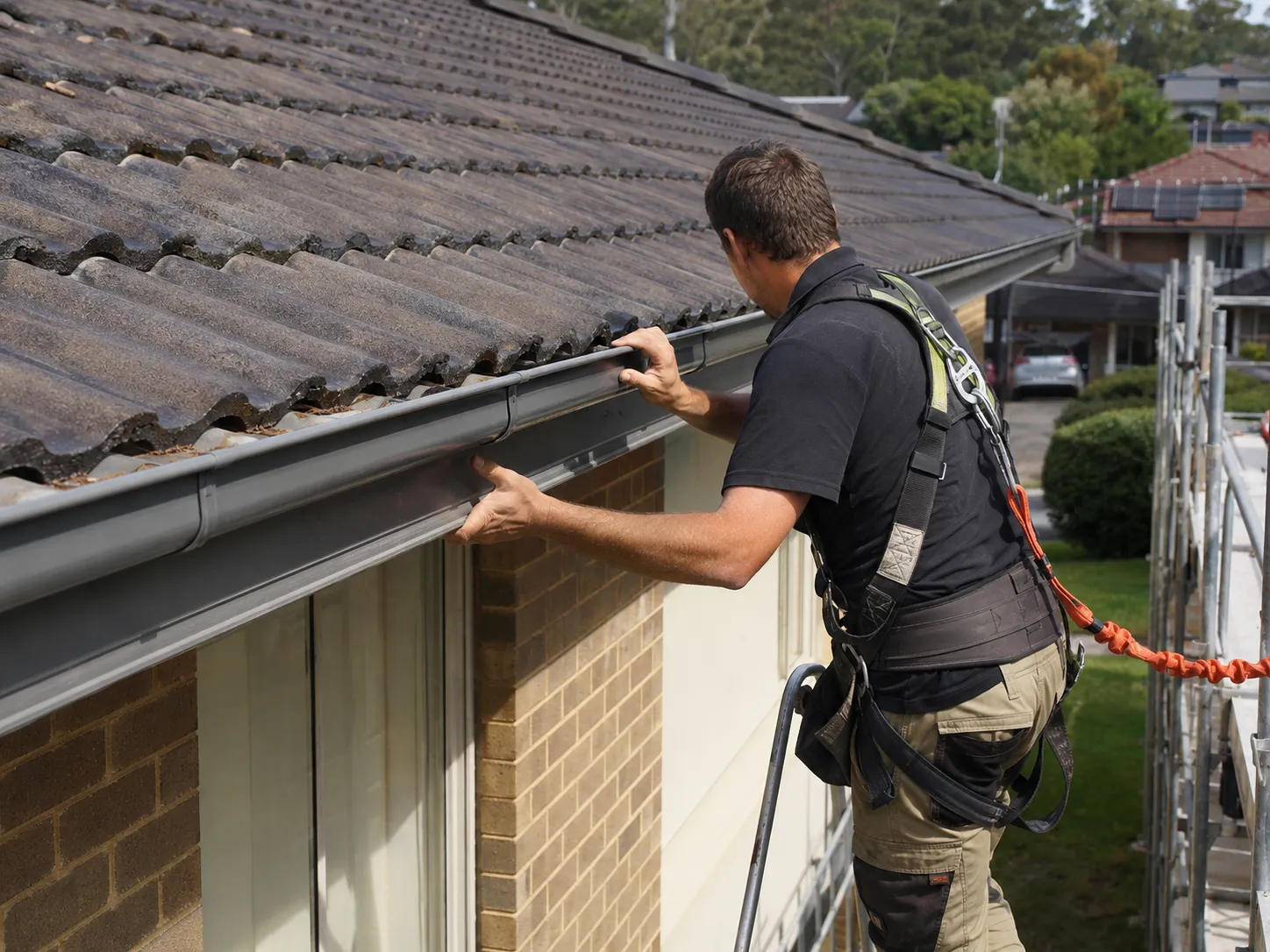
A pre-installation assessment can identify:
Addressing these issues before the new roof is installed allows the roof edge, flashings and guttering to be coordinated as one drainage system.
The amount of rain falling on a roof does not increase simply because the roof covering is metal. However, a smooth metal surface, roof pitch, panel configuration and valley layout can affect how quickly and where water reaches the eaves.
Long roof slopes and valleys can direct concentrated flows into particular sections of guttering. During heavy Sunshine Coast rainfall, these areas may overflow if the gutter profile, outlets or downpipes are inadequate.
The drainage system should therefore be assessed according to factors such as:
A new metal roof does not automatically require larger gutters. The existing system should instead be checked to confirm that it is suitable for the actual roof design and local rainfall conditions.
The point where the roof meets the gutter is particularly important. Roof-edge flashings must direct water into the gutter without allowing it to run behind the system or onto the fascia.
Loose gutters, deteriorated fascia or incorrect gutter positioning can interfere with the installation of new flashings. Water may then:
Checking these components before installation provides a stable base for the new roof-edge details and gutter brackets.
Existing gutters may be retained when they remain structurally sound, drain effectively and can be properly integrated with the new roofing system.
A guttering system may be suitable for reuse when:
Minor cosmetic fading, scratches or light surface weathering may not justify complete replacement. The important consideration is whether the gutter body, joints and supporting components can continue performing reliably.
The existing gutters may remain when they are managing rainwater without recurring problems.
Positive signs include:
An occasional blockage caused by leaves does not necessarily mean the entire system needs replacing. However, repeated overflow after cleaning may indicate poor fall, inadequate capacity, restricted outlets or incorrectly placed downpipes.
Existing gutters may be reused when they align correctly with the new roof edge and can accommodate the required flashings.
Choosing the right metal roofing profile is also important because roof design, pitch and drainage characteristics can affect how water reaches the gutters.
The contractor should confirm that:
Where removal is necessary, the contractor should explain whether the existing gutters can be carefully detached and reinstated. Older or weakened guttering may deform during removal, so reuse should not be assumed until its condition has been assessed.
Reusing gutters is most practical when they are expected to continue operating reliably for a meaningful period after the roof replacement.
Property owners should consider whether retaining the system is likely to result in:
A system that is technically usable but likely to fail within a few years may not offer good long-term value.
Roof replacement can be an appropriate time to replace gutters that are badly deteriorated, no longer managing rainwater effectively or incompatible with the new roof design.
Replacement should be considered when the gutters show:
Widespread deterioration is often difficult to resolve through isolated repairs. Patching one area may simply be followed by failure in another.
Recurring functional problems can indicate that the guttering has reached the end of its useful life or was not correctly designed for the roof.
Warning signs include:
The cause should be identified before replacement. Installing a new gutter with the same inadequate dimensions, fall or outlet placement may allow the problem to continue.
A new roof profile may change the roof-edge arrangement, flashing requirements or location of the drip line. Older gutters may no longer sit in the correct position to capture water effectively.
Replacement may be preferable when:
Replacing the guttering allows its height, position and supporting brackets to be coordinated with the new roof.
Gutters that are a similar age to the roof deserve close inspection, but age alone does not prove that they have failed.
A more useful assessment considers:
Where the system is already deteriorating, replacing it during the roofing project may avoid paying for separate access, labour and removal costs later.
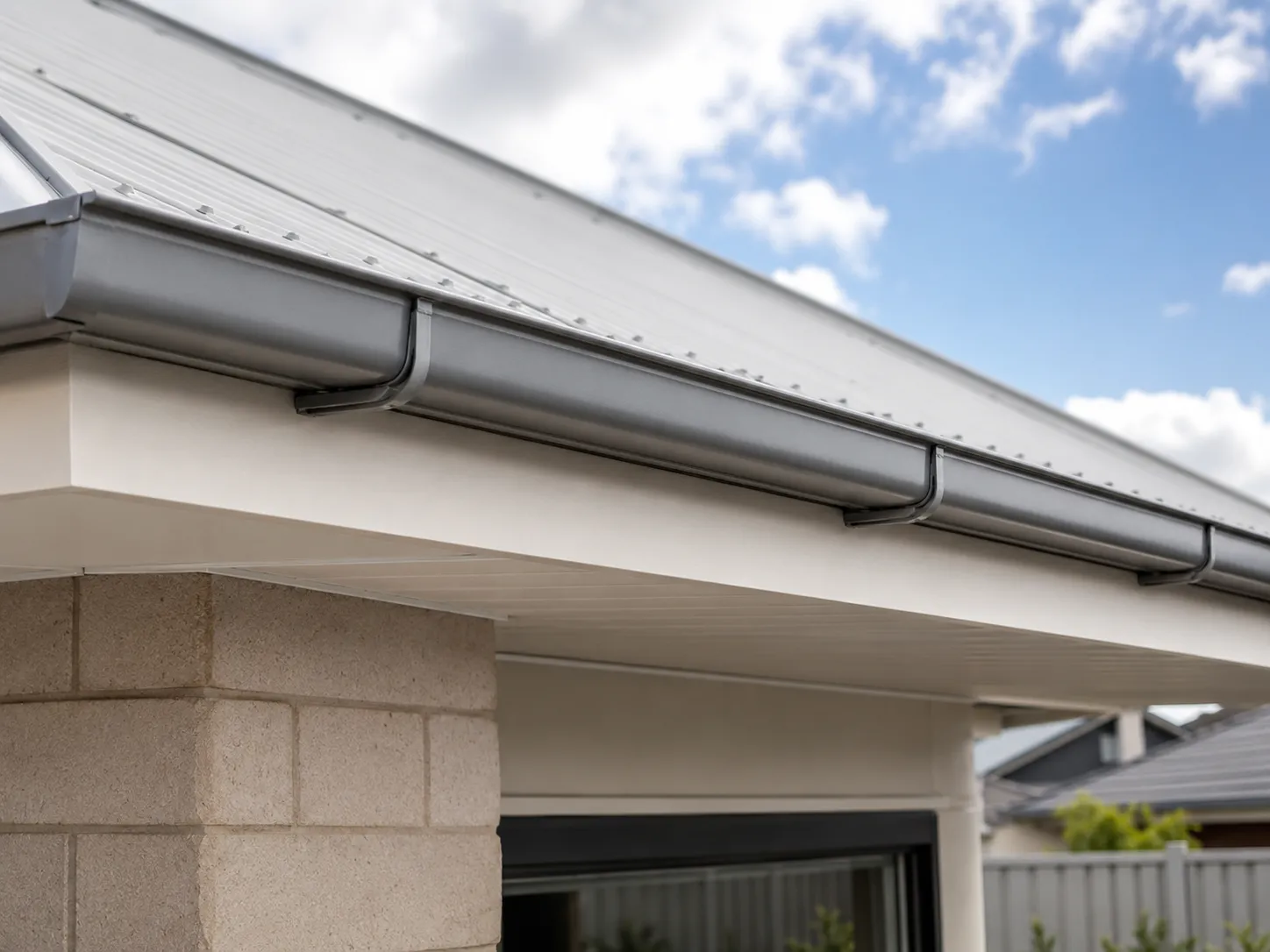
Fascia is the board or metal component located along the roof edge where many gutter systems are secured. Its condition directly affects whether gutters can be safely retained.
Potential warning signs include:
Damaged fascia may no longer hold gutter brackets securely. Under the weight of rainwater, leaves and other debris, the gutters may sag or detach.
Water can also pass behind poorly supported gutters, leading to further deterioration of the fascia, soffits and surrounding building materials.
If extensive fascia replacement is required, the gutters will often need to be removed to provide access.
Replacing the guttering at the same time may be practical when:
Installing new gutters on repaired fascia allows the contractor to establish appropriate bracket spacing, gutter fall and roof-edge alignment.
Existing gutters may still be reused when the fascia is repaired locally and the guttering remains in good condition.
Before reinstallation, the contractor should:
Reinstallation should only occur when both the fascia and gutters can provide a secure, durable connection.
The Australian gutter and downpipe requirements consider factors such as design rainfall intensity, roof catchment area, gutter capacity, downpipe placement and measures for managing overflow.
Sunshine Coast properties can experience periods of intense rainfall. Gutter and downpipe performance should therefore be assessed using the actual roof catchment and local design conditions rather than relying only on the gutter size previously installed.
A suitable drainage system needs to collect water from the roof, move it through the gutters and discharge it through the downpipes without allowing damaging overflow into the building.
The required gutter and downpipe arrangement may depend on:
Large roof areas may need additional downpipes or outlets rather than simply a deeper gutter. Valleys may also need spreaders, diverters or other correctly designed details to prevent concentrated water from overshooting the gutter.
Even correctly sized gutters can overflow during exceptional rainfall or when an outlet becomes blocked. The roof drainage design should allow overflow to escape visibly and safely rather than enter the building.
Property owners should ask how the guttering will manage:
Overflow arrangements should be considered as part of the complete roof and gutter design, not added only after a problem appears.
Coastal conditions are an important consideration for Sunshine Coast roofing and guttering. Salt carried by wind and moisture can accelerate the deterioration of unsuitable metals, coatings, brackets and fasteners.
Understanding why coastal metal roofs rust faster can help property owners recognise how salt, moisture, material selection and installation details affect both roofing and guttering.
Properties close to the ocean or exposed to prevailing coastal winds may require particular attention to material selection and maintenance.
A roof and gutter assessment should check for:
Light surface weathering does not always require replacement. However, progressing corrosion around joints, outlets or fixing points can weaken the gutter and increase the risk of leakage.
The new roof, gutters, flashings, brackets and fasteners should be compatible. Combining unsuitable metals can contribute to premature corrosion, particularly when moisture and salt are present.
The contractor should consider:
Replacing only the roof without considering the adjoining guttering can create compatibility issues that shorten the life of one or both systems.
Regular maintenance remains important even when suitable materials are installed.
Property owners can also follow the manufacturer’s COLORBOND steel maintenance guidance, which recommends washing areas that are not naturally cleaned by rain more frequently where marine salt spray is present.
Depending on the property’s exposure, maintenance may include:
The contractor should provide maintenance advice that reflects the selected roofing and gutter materials.
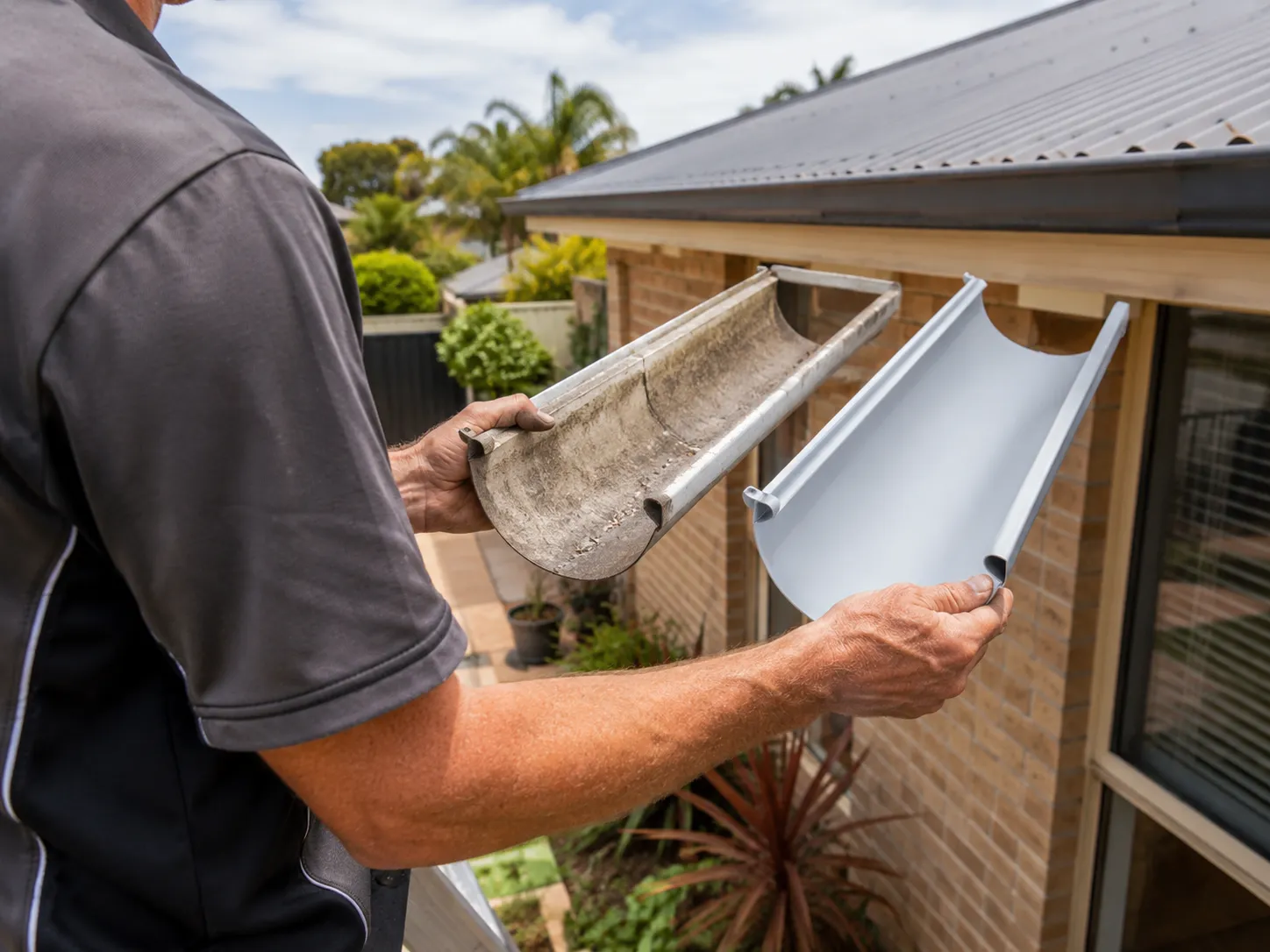
Where gutter replacement is already necessary, completing both projects together can offer practical and financial benefits.
Installing the roof and gutters as part of one coordinated project allows the contractor to align:
This can reduce the risk of water running behind the gutter or overshooting it.
Completing both projects together may reduce repeated costs associated with:
It may also prevent the need to disturb the new roof edge when the old gutters are replaced later.
New gutters can be selected to complement the roof colour, finish and profile. The contractor can also confirm that the materials and fixings are suitable for the same coastal environment.
Replacing an already deteriorated guttering system at the same time as the roof can reduce the likelihood of leaks, repairs and access work shortly after the roofing project has been completed.
However, replacement should still be justified by the system’s condition and expected performance. Gutters that remain sound should not be discarded unnecessarily.
Complete replacement is not always the most economical option. Localised repairs may be sufficient when the wider system remains in good condition.
Possible repairs include:
Repair is most suitable when the problem is confined to a small area and the remaining guttering has reasonable service life.
Repeated repairs across several areas usually suggest that the system should be considered for replacement.
A clear written quote helps property owners compare contractors and understand exactly what will happen to the existing guttering.
General descriptions such as “premium materials” or “complete roof replacement” may not provide enough information. The scope should identify the products, work methods and responsibilities involved.
The roofing section should explain:
The quote should clearly state whether the gutters will be:
Where gutters are being reused, the quote should explain whether brackets, joints, outlets and fall will be checked.
Where replacement is included, the quote should specify:
The quote should not assume that all existing stormwater connections are suitable. Any work outside the roofing contractor’s scope should be clearly identified.
The contractor should state whether the price includes:
Where hidden damage cannot be priced before removal, the quote should provide an agreed rate or process for approving additional work.
The quote should identify any allowances for:
Safety requirements should not be treated as optional extras after work begins.
Property owners should confirm that the contractor holds the appropriate Queensland licence for the work being completed.
The quote should also outline:
Before approving the project, property owners may wish to ask:
Clear answers can help prevent misunderstandings and reveal whether the roof and guttering have been considered as one complete system.
Whether gutters should be replaced during a roof replacement depends on their current condition, drainage performance, material suitability and compatibility with the planned roof.
Existing gutters may remain when they are secure, correctly aligned, free from significant deterioration and capable of managing water from the roof catchment. Repair may be appropriate when problems are minor and localised.
Replacement is more likely to provide better value when the gutters are extensively corroded, repeatedly leaking, poorly positioned, inadequately supported or expected to require major work soon after the roof is completed.
Sunshine Coast property owners should also consider local rainfall, concentrated valley flows, coastal salt exposure and the compatibility of roofing, guttering and fixing materials.
CBT Roofing recommends assessing the roof, gutters, downpipes, fascia and stormwater discharge as one coordinated system. A professional inspection before work begins can help determine whether the existing gutters should be retained, repaired or replaced as part of the metal roof replacement.
Making this decision at the beginning of the project can improve rainwater management, reduce duplicated work and help protect the long-term investment in the property’s new roofing system.