

Why Do Some Coastal Metal Roofs Rust Faster Than Others?
May 26, 2026
Living or working near the coastline often means metal roofs are exposed to far more aggressive conditions than roofs further inland. Salt-laden air, high humidity, strong winds and frequent moisture can all shorten the lifespan of a roofing system when the wrong materials, coatings or installation methods are used. On the Sunshine Coast, where metal roofing is commonly exposed to coastal weather, roof lifespan often depends on the quality of the materials, installation details, roof design and ongoing maintenance rather than age alone.
CBT Roofing explores why some coastal metal roofs deteriorate much faster than others and how salt exposure, trapped moisture, fasteners, flashings, gutters and poor installation practices all influence corrosion. The article also explains why regular cleaning and early professional attention can help slow rust, reduce leak risks and extend the working life of a metal roof.
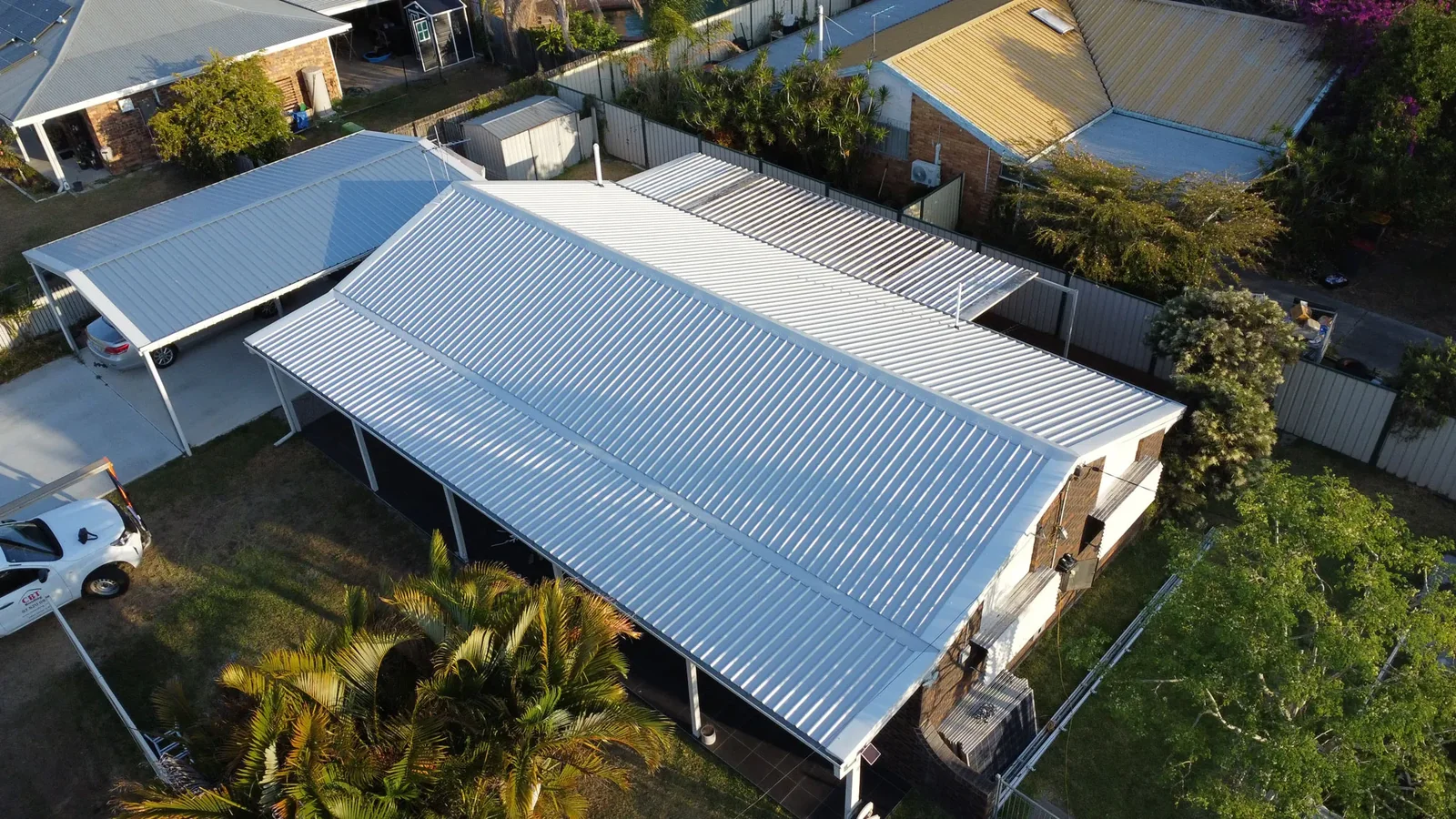
Metal roofs near the coast face a much harsher environment than roofs further inland. Salt in the air, constant moisture and strong winds all speed up the corrosion process, meaning even good-quality metal systems can deteriorate faster if they are not selected, installed and maintained correctly.
Understanding why this happens is important when choosing roofing materials, specifying the right coating system and planning maintenance that prevents premature rust rather than only responding once corrosion is already visible.
The main reason coastal roofs rust faster is salt. Sea spray and fine salt particles are carried inland by wind and settle on roof surfaces. When those particles mix with moisture from rain, humidity or dew, they create a corrosive layer that can slowly attack protective coatings and exposed metal.
Steel and lower-grade galvanised products are especially vulnerable in this environment. Tiny breaks in the coating, scratches, drilled holes or cut edges can allow salt to reach the bare metal underneath. Once that happens, rust can begin at those weak points and gradually spread beneath the surrounding coating.
In highly exposed locations close to the shoreline, corrosion can appear much earlier than expected if the roofing system is not suitable for marine conditions. This is why coastal roofing specifications need to account for exposure levels, not just the general appearance or thickness of the roof sheets.
Coastal climates often have higher humidity, heavier dew and frequent mist or light rain. Metal roofs in these areas are repeatedly exposed to wet and dry cycles, which can accelerate corrosion when salt remains on the surface.
Moisture can also linger in areas that do not dry quickly. Valleys, low-pitch sections, laps, shaded areas, behind parapets and around fasteners are common places where water and salt deposits can sit for long periods. The longer salt and moisture stay in contact with metal, the greater the risk of coating breakdown and rust.
Poor ventilation can add to the problem. Warm, moist air from inside a building may condense on the underside of metal sheets, especially overnight when external temperatures drop. This can create corrosion on the underside of the roof as well as the exposed outer surface.
Coastal winds are often stronger and more persistent. They can carry fine sand, grit and debris that gradually wear down protective paint and metallic coatings, particularly on ridges, edges and exposed roof planes.
Strong winds can also drive rain and salty spray into roof laps, around screws, beneath flashings and into poorly sealed penetrations. If these areas are not detailed correctly, trapped salty water can attack fasteners, cut edges and unprotected metal.
Small scratches from branches, debris, foot traffic or maintenance work become more serious near the coast. Once the base metal is exposed, salt and moisture can quickly start corrosion. If the damage is not cleaned and treated early, rust may spread well beyond the original scratch.
The position and shape of a metal roof can greatly influence how much salt it collects from coastal air. Two nearby properties can experience very different corrosion rates if one roof is more exposed to onshore winds, sits higher on the landscape or has details that trap salty moisture.
Roof height, orientation, pitch, drainage and architectural detailing all affect how quickly a metal roof dries and how easily salt deposits are washed away.
Roofs that sit higher, face the ocean or are located on exposed sites are usually hit harder by salt-laden wind. Salt can travel inland for kilometres, although its concentration generally decreases with distance from the shoreline.
Taller buildings, elevated homes and properties on ridgelines often receive stronger, more direct wind. This can drive salt particles against the roof surface and increase the amount of residue left behind. Lower roofs that are sheltered by neighbouring buildings, trees or landforms may experience slower corrosion because less direct salt spray reaches the metal.
Orientation also matters. Roof planes facing prevailing coastal winds or open water usually show rust earlier than protected slopes. In many coastal areas, the most exposed side of the roof will deteriorate faster than the leeward side, even when both areas are made from the same material.
How well a roof sheds water is just as important as how much salt reaches it. Steeper roofs generally allow rain to wash away salt more effectively and help surfaces dry faster. Flatter roofs hold moisture for longer, allowing salt to remain in contact with the metal.
Complex roof shapes can also increase corrosion risk. Butterfly roofs, internal box gutters, low-slope sections, multi-level rooflines and areas behind parapets can all create pockets where water, debris and salt collect. These areas may stay damp well after the rest of the roof has dried.
Wide eaves and verandahs can protect walls from direct spray, but they may leave soffits, flashings and underside details exposed to swirling coastal wind. Without proper drainage and ventilation, these sheltered areas can remain humid and salty, making corrosion more likely.
Small roof details often determine where corrosion starts. Tight junctions between roof sheets and wall flashings can hold fine salt crystals. When dew or light rain dissolves those crystals, the salty moisture can attack cut edges, screws and sealant lines.
Valleys, box gutters, parapet caps, ridge flashings and areas around roof penetrations are common rust hotspots because they combine high water flow with slower drying. In coastal conditions, these details should be designed to move water and debris away from the roof as efficiently as possible.
Good coastal roof detailing should include:
Poor installation can turn a corrosion-resistant metal roof into a problem roof within only a few seasons. Even high-quality roof sheets and coatings can fail early if installation creates exposed metal, damaged coatings or areas where salty moisture becomes trapped.
In coastal environments, small installation errors often become early rust points. Fastener selection, screw placement, sealant use, flashing work and cutting methods all influence how well a roof performs over time.
Using the wrong fasteners is a common cause of early rust. If screws, washers or clips are not compatible with the roof sheets, corrosion can occur where different metals touch and remain damp. In coastal zones, fasteners should match the roofing system and be rated for the level of exposure.
Over-driving screws is another issue. When screws are tightened too much, the washer can split, distort or press too hard into the coating. This may expose bare metal around the screw hole, creating a small ring where rust can begin. Under-driven screws can also cause problems because loose washers allow water to sit around the penetration.
Fasteners installed at an angle, placed incorrectly or fixed into weak substrates can move under wind pressure. Over time, that movement can enlarge holes, break protective coatings and allow moisture to enter. Every penetration in a coastal metal roof needs to be square, secure and properly sealed.
Metal roofs rely on correct detailing around penetrations, transitions, edges and roof junctions. Gaps, poorly placed sealant or incorrect lap details can allow salty moisture to enter areas that are difficult to see and slow to dry.
Improperly lapped panels can draw water into joints through capillary action. Once water enters a lap, it may sit against cut edges and fastener holes. Ridge caps, side laps and end laps need to follow the manufacturer’s required sequence and fixing pattern so water sheds cleanly.
Sealant failure is another common problem. Using the wrong sealant, applying it to dirty or damp surfaces, or relying on sealant instead of proper flashing design can lead to early cracking and separation. Once the seal fails, water can enter around vents, skylights, flues, walls and other penetrations.
Flashing errors around walls, gutters and valleys can also create ledges where debris and salt collect. These pockets stay wet longer than open roof areas, which gives corrosion more time to develop. Correctly installed flashings should direct water away from vulnerable points rather than allowing moisture to sit against exposed edges.
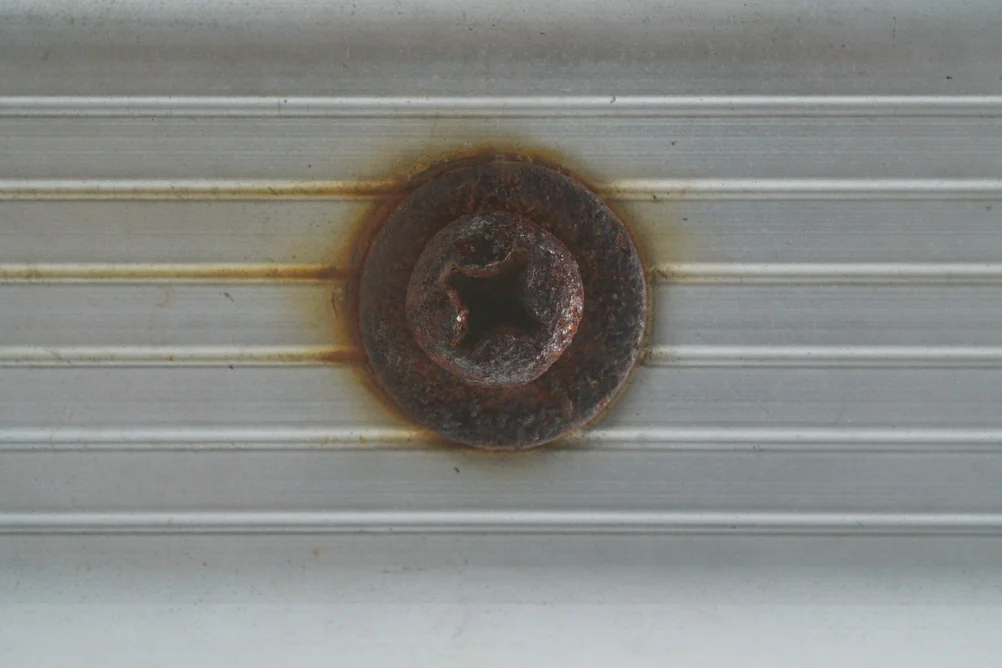
The first visible signs of rust often appear around screws, sheet edges, flashings and gutters rather than across the main body of the roof sheets. These components are more exposed to trapped moisture, more likely to have cut or drilled edges and may not have the same level of coating protection as the roof panels.
Understanding why these areas fail first helps explain why one coastal roof can look worn and rusty long before another nearby roof made from similar materials.
Fasteners, flashings and gutters are sometimes made from materials or coatings that differ from the main roof sheets. When dissimilar metals touch in the presence of moisture, galvanic corrosion can occur. Salt-laden coastal air makes this process more aggressive.
The more vulnerable metal in the combination may corrode faster. This can affect screw heads, flashing edges, gutter outlets and other thin or exposed components. Once rust begins in these areas, staining and pitting may spread into surrounding roof sheets or coatings.
Using compatible materials is especially important near the coast. The roof sheets, screws, clips, flashings and gutters need to work as a system, not as separate parts chosen without regard to corrosion risk.
Even when compatible metals are used, accessories often have more vulnerable edges than the main roof sheets. Factory-coated roof sheets usually have a durable paint and metallic coating system. By comparison, cut flashing edges, drilled holes, screw heads and gutter interiors may have less protection once they have been cut, shaped or installed.
These areas are also exposed to harsher micro-conditions. Screws sit in small depressions where water and salt can collect. Flashing edges are exposed to wind-driven spray. Gutters hold water, leaves, dirt and salt for longer than open roof surfaces.
Repeated wetting and drying concentrates salt on these vulnerable points. Over time, even a small break in the coating can become a visible rust stain, then a more serious corrosion issue.
Fasteners, flashings and gutters are also where poor installation becomes obvious first. Over-tightened screws, screws driven at an angle, unsealed overlaps, scratched flashings and metal filings left on the roof can all create early rust points.
Gutters are particularly vulnerable because they collect debris. Leaves, sand, dirt and salt-laden material can block outlets and hold water against the metal. If gutters are not cleaned regularly, they may rust through years before the main roof sheets show serious damage.
Careful material selection, correct installation and regular cleaning are essential if fasteners, flashings and gutters are to age at the same rate as the rest of the roof.
Regular cleaning and basic maintenance are among the most effective ways to slow rust on a coastal metal roof. Salt deposits, organic debris and moisture sitting on roof surfaces can accelerate corrosion far more than clean, dry conditions.
Even high-quality coatings can break down if they are left covered in salt film and damp debris. A roof that is cleaned and inspected regularly will usually last longer than a similar roof that is left unattended.
Salt from sea spray does not disappear after it lands on a roof. It dissolves in dew, condensation or light rain, then dries into a concentrated film that continues attracting moisture from the air. This salty layer sits against the protective coating and increases the risk of corrosion.
Regular cleaning helps remove:
On many coastal metal roofs, a gentle freshwater rinse every three to six months can help reduce salt buildup. More exposed properties facing open water or strong onshore winds may need more frequent rinsing. Cleaning should be done with low-pressure water from the ridge downwards to avoid forcing water under laps or flashings.
Harsh chemicals, abrasive tools and high-pressure washing should generally be avoided unless specifically recommended by the roof product manufacturer. These methods can damage coatings and shorten the life of the roofing system.
Cleaning is only one part of coastal roof care. Regular inspection helps identify small defects before they turn into widespread corrosion or leaks.
Important maintenance tasks include:
Any exposed bare metal should be treated quickly using the correct products for that roof system. For painted or coated roofing, this usually means cleaning the area, allowing it to dry and applying a manufacturer-approved primer or touch-up coating. Leaving scratches exposed in a coastal location can allow rust to creep under the surrounding paint.
Some light surface staining may be minor, but certain rust patterns indicate that a coastal metal roof needs professional assessment. Because salt exposure can speed up corrosion, a small rust patch can become a larger issue faster than it would in an inland environment.
Once rust affects seams, fasteners, flashings, gutters or structural components, the roof may no longer be simply weathered. It may be losing its ability to keep water out and withstand coastal weather.
Light orange staining that wipes off easily or is limited to a small scratch may be cosmetic. More serious corrosion usually shows signs of metal breakdown or coating failure.
Warning signs include:
If rust has created holes or perforations, the roof should be inspected promptly. Water can enter through these openings and cause hidden damage beneath adjoining sheets, insulation or roof framing.
Rust is more serious when it appears in areas that affect the roof’s structure, weather resistance or drainage. These locations should not be ignored.
High-risk areas include:
Rust around fasteners can affect how securely the roof is fixed. Rust around penetrations often suggests failed sealants or flashings. Corrosion in gutters and valleys can quickly lead to leaks because these areas carry large amounts of water during heavy rain.
Minor surface rust may sometimes be cleaned and treated by property owners using approved products. However, professional help is usually the safer option when the roof is steep, high, difficult to access or showing signs of more advanced corrosion.
A roofing contractor should assess the roof if:
A professional inspection can determine whether the roof needs localised repairs, fastener replacement, flashing work, gutter replacement, panel replacement or a more extensive roof restoration. Acting early is usually far more cost-effective than waiting until corrosion forces a full roof replacement.
The lifespan of a coastal metal roof depends on how well the roofing system is matched to its environment. Salt exposure, humidity, trapped moisture and abrasive winds place constant pressure on roof sheets, coatings, fasteners, flashings, gutters and cut edges. High-quality materials can slow corrosion, but they must be supported by correct installation, suitable detailing and regular maintenance.
When the right materials are paired with careful installation and early attention to corrosion hotspots, coastal metal roofs can continue performing reliably for decades. For Sunshine Coast properties, understanding these risks makes it easier to prevent premature rust, protect the building and make better decisions about roof repairs, maintenance or replacement.